Culture
Beyond travel: immersing in the invisible
In French Polynesia, culture is not merely observed; it is felt. Every year, as the southern winter sets in and the Mara'amu winds sweep across the lagoon, a remarkable fervour takes hold of the archipelagos: it is the season of Heiva. More than a mere festival, this sacred gathering is the moment when the mundane fades before the celebration of Mana. It is a time of year when neighbourhoods vibrate to the rhythm of nightly rehearsals, where hands are busy crafting intricate costumes, and the fragrance of flowers permeates every alleyway. Through dance, choral chants in unison, and traditional sports, the Polynesian people rekindle their spiritual strength and affirm their multifaceted identity. Every gesture and every war cry becomes a living word addressed to the ancestors, proving that the Mā’ohi heritage is a breath that never falters. Welcome to the heart of the most iconic event in Polynesian culture.
Rebirth through motion
The Odyssey of a Renaissance (1819 – 1985)
The story of Heiva cannot be told without acknowledging its tumultuous past. In 1819, under the influence of British missionaries, the Pomare Code plunged traditional dances into a forced silence, deeming them incompatible with Christian morality. Yet, though clandestine, the beat of the drums never truly ceased; it endured within the secrecy of the valleys. Driven by a century of refusal to let their identity perish, the people maintained a vivid resolve to be heard through their dance and song.
It was not until 1881, following the annexation by France, that this culture reclaimed its prestige under the name Tiurai (July). What began as an administrative concession to celebrate Bastille Day evolved, over a century and a half, into the banner of a rediscovered identity. In 1985, the term 'Heiva i Tahiti' (meaning entertainment or gathering) officially replaced 'Tiurai', marking the total cultural emancipation of the Fenua.
To truly comprehend the force that stirs the crowds today, one must remember a single name: Madeleine Moua. At a time when dance was still stifled, almost shameful, this woman had the courage to bring it out of the shadows and back onto the world stage. With her troupe, Heiva Tahiti, she did more than perform; she restored a nation’s pride. It was she who laid the foundations, imposed a newfound rigour, and defined what ’Ori Tahiti must be to command respect.
It is no coincidence that, even today, the jury follows criteria she helped to establish. When the Grand Prix Madeleine Moua is awarded, it is not merely a trophy being handed over: it is a direct link to the woman who refused to let our culture become a mere souvenir for a postcard.
The Thrill of To’atā
The moment the first Pahu drums thunder across the mythical square of To’atā, time stands still. The air, usually light, becomes saturated with a dense aroma: the intoxicating blend of fresh Tiare and More fibre. This is the signal. Each district, each troupe, comes forward to proclaim their Paripari Fenua. This is no mere speech; it is a rallying cry, a rhythmic poetry that strikes their roots even deeper into the land of their ancestors.
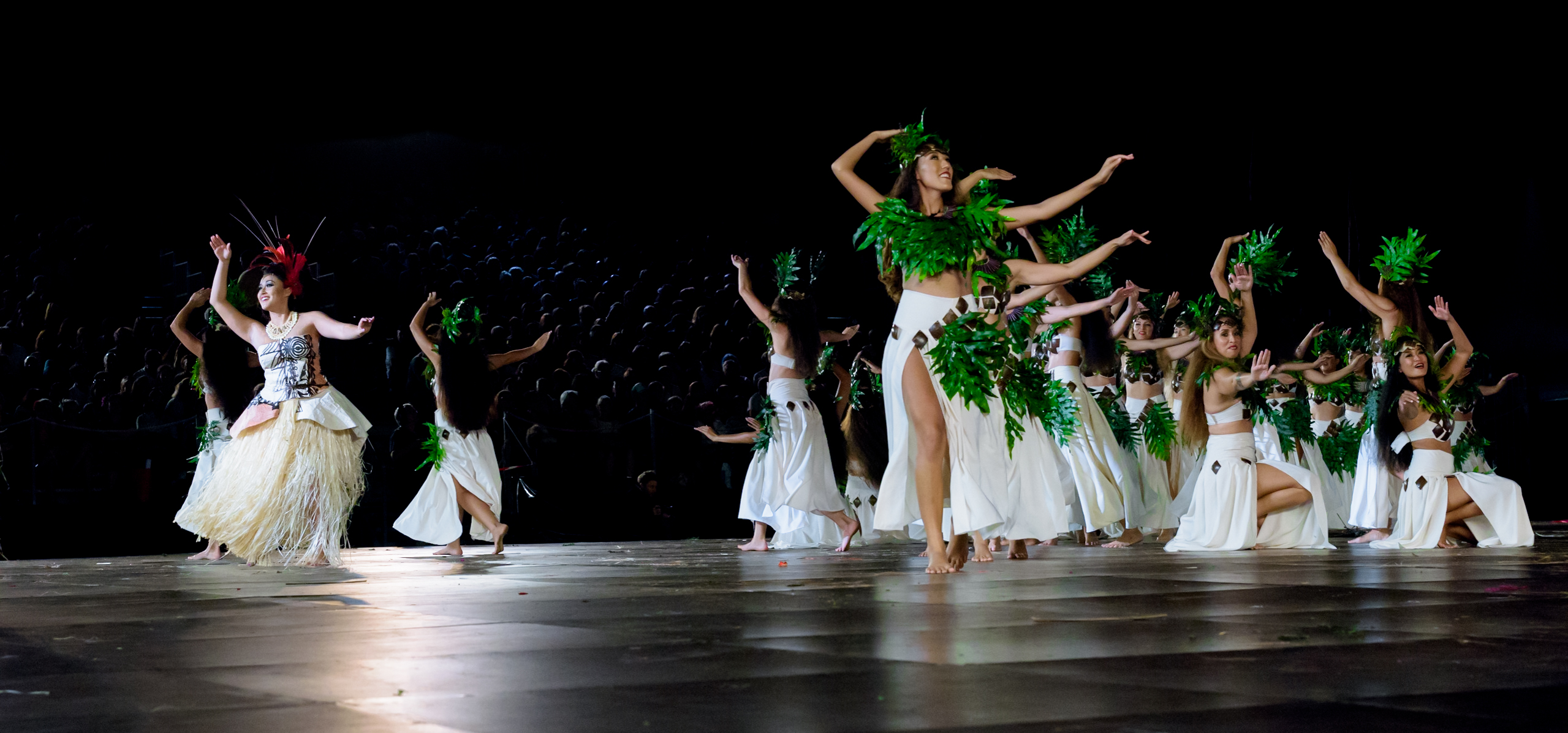
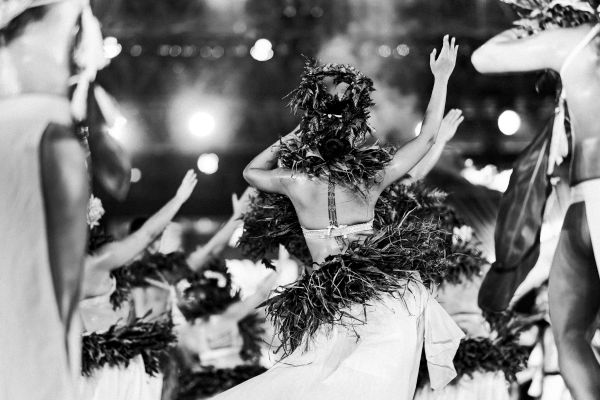
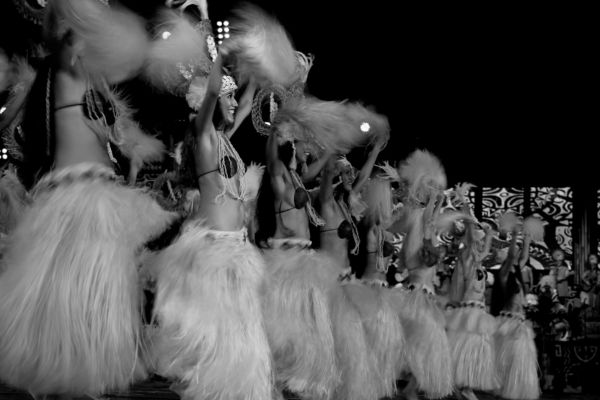
On stage, ’Ori Tahiti unfolds like a tidal wave. It is a magnificent battlefield where the raw power of the men, cutting through the air with fierce Pa’oti, meets the almost ethereal grace of the women in their soft, silent movements. During the ’Ōte’a, their hips dictate a tempo that the eye can scarcely follow—a collective hypnosis that strikes at the very core of your being.
Then comes a vibration from another realm: the Hīmene. Often, the foreign spectator lets their guard down, and that is precisely when the Tārava takes hold. These chants, with their infinite layers, envelop the arena in a mystical shroud of sound. The voices intertwine without a single gesture, creating an organic wave that seems to rise from the very depths of the earth.
Yet the true magic of Heiva lies in the triumph of the ephemeral. Behind those few minutes of performance lie months of silence and calloused fingers. The Grand Costumes are masterpieces of patience, where every seed and every fibre is sewn with the precision of a master goldsmith. One leaves a piece of one's soul within them. This demand for perfection serves as a reminder that the sweat shed during nightly rehearsals, under the streetlights of the districts, is as precious as the final ovation beneath the spotlights.
The A’au: A Soul Stirred to its Depths
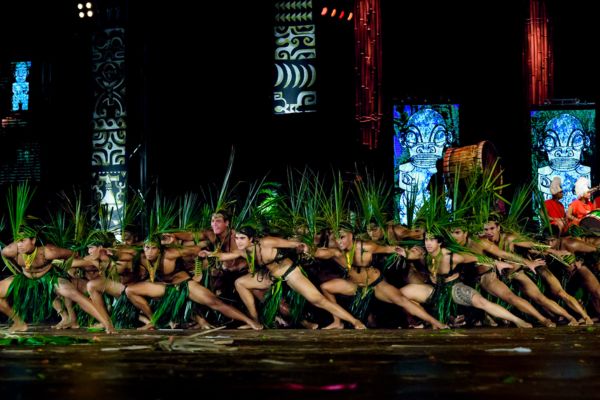
A first strike of the Pahu, sharp as an electric shock, and months of sacrifice evaporate to make way for the moment. Between four and six months of life put on hold—of nightly rehearsals under the rain or in the sweltering heat of the hangars—all for these few minutes of vertigo. On stage, it is no longer mere dance; it is an explosion of the A’au. It is a force rising from the depths of one's being, where pride mingles with utter exhaustion and the tears one fights to hold back. Moments before entering, there were the rallying cries, the knots in the stomach, and the final adjustments to costumes that weigh heavy on the shoulders. But once beneath the spotlights, everything else fades. It is a raw emotion, almost impossible to translate for those who have never felt the ground of To’atā vibrate beneath their feet. In the stands, the audience contemplates a 'result': they judge, they admire, they seek the thrill. But on the stage, we seek nothing; we give everything. We do not perform an identity; we live it—we scream it in silence with every movement. It is the singular moment when the troupe becomes one body, one breath, before the silence falls once more.
Heiva: A Legacy of Self-Sacrifice
To commit to Heiva is to accept putting one’s life on hold for six months. It is a silent pact signed with one’s loved ones, a long negotiation with the household. Husbands, wives, children... everyone is swept up in the whirlwind. Professional schedules are rearranged, social lives vanish, and friends eventually stop seeing you. Birthdays are celebrated belatedly, and family events are pushed to the background, if not the very periphery of existence.
Heiva consumes everything. There inevitably comes a moment when tension rises; one spends more time with the troupe than with a partner or children. It is a stage everyone must endure, yet in the end, reconciliation follows, born of a shared understanding and unwavering support. This is the magic of Polynesia: here, people understand; there is little need for worry. There exists a tacit consensus that Heiva is a project far greater than oneself. The family does not merely endure the absence; they become the primary support, the invisible foundation that allows the dancer to persevere until the night of To’atā.
Within the Secrecy of Rehearsals: The Pursuit of a Shared Ideal
There is a standard of excellence that remains unspoken at first, only to reveal itself fully in the final weeks before the performance: discipline. The watchword of every rehearsal—at times tested by misunderstandings, unforeseen absences, or the vagaries of daily life—remains cohesion. Maintaining the unity of the group despite the creeping exhaustion is a nightly challenge.
There are hours spent treading water, where one must accept starting from scratch or refining formations for hours on end before finally experiencing the thrill of a 'filage' (a full run-through of the performance planned for To’atā). In this arena, tensions can arise between the performers and those teaching the dances. Voices may be raised and the rigour is palpable, yet it is done with a balance of toughness and benevolence. We push one another to rise together, for this demand for perfection serves as a reminder that the sweat shed during nightly rehearsals is as precious as the final ovation beneath the spotlights.
Moana Voyages: An Inside View of the Emotion
Heiva i Tahiti is not merely a spectacle to be observed; it is a fervour to be shared. At Moana Voyages, this passion transcends our professional lives: this year, several of our own team members are setting aside their files for More and flowers, joining the ranks of the dancers on the mythical stage of To’atā.
It is this authenticity, lived from within, that we wish to convey. By taking an active part in this event, our teams do more than simply advise on an itinerary; they share a piece of their lives and their culture with audiences from home and abroad. Moana Voyages invites you to experience a total immersion into the heart of the Fenua, ensuring that Heiva is no longer just a story, but an unforgettable encounter with the Polynesian soul.
